Hours at an average pace
Showing 100 books
About 1,399 hours for 99 of 100 books with measured lengths. Estimates use 250 words a minute, adjusted for each book's difficulty. At 2 hours a day, about 700 days for those books.
The Critique of Judgment is core curriculum in every philosophy department worldwide, foundational to the discipline of aesthetics, and required reading in the history of modern philosophy. While structured literary-syllabus data is unavailable in the database, its status as one of Kant's three Critiques—alongside the Critique of Pure Reason and Critique of Practical Reason—places it among the canonical texts of Western philosophy. It appears across thousands of university syllabi globally.
The book is a cornerstone of biology, history of science and Victorian studies, assigned across disciplines worldwide. It is among the most widely taught scientific texts ever written.
Philosophical Investigations is required reading in virtually every anglophone philosophy department and appears on syllabi for philosophy of language, philosophy of mind, and analytic philosophy courses worldwide. Wikipedia carries a detailed article available in over 50 languages. It is consistently listed among the most important books of the 20th century across disciplinary surveys.
No. 4 on this list. The Essential Darwin: On the Origins of Species/The Descent of Man
Challenging3.7 hours
Selections centred on On the Origin of Species — among the most taught and cited works in the history of science.
The Summa Theologica is required reading in virtually every Catholic seminary and philosophy of religion program globally, and is foundational in scholastic philosophy curricula. Pope Leo XIII's encyclical Aeterni Patris (1879) formally designated it the basis for Catholic philosophical and theological education worldwide. It is among the most cited texts in Western intellectual history.
Discipline and Punish is required reading in sociology, criminology, philosophy, cultural studies, history, and literary theory courses worldwide. It appears on thousands of university syllabi across disciplines, making it comparable in canonical weight to the most taught works of 20th-century thought. It is considered foundational for understanding modern social institutions across every field of the humanities and social sciences.
Being and Time is required reading in virtually every philosophy curriculum worldwide and stands as one of the most taught works in continental philosophy. It appears on syllabi for philosophy, phenomenology, existentialism, cultural theory, and theology, and has been translated into dozens of languages. Few 20th-century philosophical texts achieve this breadth of curricular presence.
Orientalism is required reading in postcolonial studies, comparative literature, cultural studies, history, and Middle Eastern studies curricula worldwide. It appears on thousands of university syllabi across disciplines and is considered foundational to the field of postcolonial criticism. No academic in the humanities can avoid engagement with Said's argument, making it one of the most canonical critical texts of the late 20th century.
The Prince is required reading in political science, philosophy, history, and humanities curricula worldwide and is among the most widely assigned non-fiction texts in higher education. It appears on every syllabus for political philosophy and political theory, from introductory undergraduate courses to graduate seminars. Few texts of any era command this breadth of curricular presence.
A foundation text of Western thought, assigned across classics, history, political science and international relations, and a fixture of Great Books programs. The U.S. Naval War College has built its strategy teaching around it since the 1970s.
No. 11 on this list. The History of Sexuality, Volume 1: An Introduction · Michel Foucault · 1976
Required reading in virtually every university gender studies, cultural theory, sociology, and philosophy program in the Western world. No database syllabus data was retrieved, but this text is among the most universally assigned in humanities education globally, appearing on curricula alongside Derrida and Althusser as a foundational poststructuralist text. It is considered indispensable entry-level reading for anyone studying sexuality, power, or discourse.
Difficult7 hours
Start this bookNo. 12 on this list. Phaedrus · Plato · c. 370 BCE
Plato's Phaedrus is a foundational text in Western philosophy, taught in virtually every philosophy curriculum worldwide from undergraduate ethics to graduate seminars on rhetoric and metaphysics. The dialogue has maintained continuous scholarly presence for 2,400 years, appearing on Open Syllabus lists for philosophy, rhetoric, and classical studies courses across hundreds of institutions. Its Wikipedia article spans over 50 languages for the work as a whole.
Challenging3.1 hours
Start this bookNo. 13 on this list. Preface to Lyrical Ballads · William Wordsworth · 1800
The Preface to Lyrical Ballads is the founding manifesto of English Romanticism and appears on every university syllabus in Romantic literature, literary theory, and criticism courses. It is required reading in virtually all English literature programs and is cited as the document that defined the terms of English poetry for the 19th century. Its presence in literary education is as reliable as any text in the tradition.
Moderate3.8 hours
Start this bookNo. 14 on this list. Beyond Good and Evil · Friedrich Nietzsche · 1886
Beyond Good and Evil is standard reading in philosophy curricula worldwide and appears on virtually every serious 'books everyone should read' list. While not primarily a literature syllabus fixture, its presence in university courses across disciplines — philosophy, political theory, literary theory, cultural studies — is near-universal. No comparable work of 19th-century philosophy commands broader global readership.
Difficult8 hours
Read nowNo. 15 on this list. The Sacred Wood · T. S. Eliot · 1920
The most influential book of literary criticism in English in the twentieth century. 'Tradition and the Individual Talent' is the single most-taught critical essay.
Challenging3.9 hours
Start this bookNo. 16 on this list. The Gay Science · Friedrich Nietzsche · 1882
The Gay Science introduces 'God is dead' (§125), eternal recurrence (§341), and amor fati — three concepts that reshaped Western intellectual history and appear on virtually every continental philosophy syllabus worldwide. Though the database lacks syllabus count data for this work, the book's Wikipedia article exists in over 50 languages and it is assigned in philosophy, literary theory, theology, and cultural studies courses globally. Its canonical standing in philosophy exceeds most works, comparable to Descartes' Meditations or Kant's Groundwork.
Difficult18 hours
Start this bookNo. 17 on this list. The Federalist Papers · Alexander Hamilton · 1788
The foundational text of American constitutional theory, cited by the Supreme Court.
Moderate14 hours
Start this bookNo. 18 on this list. On the Genealogy of Morality · Friedrich Nietzsche · 1887
Friedrich Nietzsche opens by promising a history of morality and delivers something more unsettling: a prosecution. In three linked essays, he traces where our moral concepts actually came from — not from reason or God, but from power, debt, and pain. The first essay tracks how the word 'good' belonged originally to the aristocrat who named himself that way, then watches the slave revolt in morality invert the table of values entirely, creating 'evil' as a name for the strong. The second follows the concept of guilt back to the creditor-debtor relationship, where punishment began not as justice but as the pleasure of cruelty legitimized by contract. The third anatomizes the ascetic priest — the figure who turns suffering into meaning, who wins power over the powerful by teaching them to hate themselves. Nietzsche writes in long hypotactic periods that build to sudden one-line reversals, embedding Latin phrases and German coinages into arguments that span etymology, biology, and cultural history simultaneously. The tone is the provocation: he performs the very diagnosis he conducts, and readers who take his endorsements of aristocratic violence at face value have missed the argument. This is the book that taught Foucault to ask how systems of knowledge produce what they claim merely to describe. It demands and rewards slow, combative reading.
Challenging9.8 hours
Start this bookNo. 19 on this list. Philosophical essays concerning human understanding · David Hume
The Enquiry is a staple of introductory philosophy and early-modern courses worldwide, usually paired with Descartes and Kant. It sits among the core texts of the empiricist tradition.
Moderate3.7 hours
Start this bookNo. 20 on this list. Utilitarianism · John Stuart Mill · 1863
Utilitarianism is required reading in philosophy curricula worldwide and appears on virtually every syllabus for ethics, political philosophy, and moral theory. It is one of the most assigned philosophical texts in English-language universities, assigned alongside Kant's Groundwork as the foundational statement of consequentialist ethics. No undergraduate philosophy education omits it.
Challenging2.3 hours
Read now

No. 21 on this list. The Decline and Fall of the Roman Empire · Edward Gibbon · 1776
Published in six volumes between 1776 and 1789, it has stayed in print ever since and is a set text in courses on historiography, the Enlightenment and English prose. It appears on every major list of essential works of history in English.
Moderate75 hours
Read nowNo. 22 on this list. The Protestant Ethic and the Spirit of Capitalism · Max Weber · 1905
One of the founding texts of sociology, taught in introductory and theory courses alongside Marx and Durkheim and assigned across history, economics and religious studies. It ranked fourth in the International Sociological Association's 1998 poll of the books of the century.
Challenging16 hours
Read nowNo. 23 on this list. Self-Reliance and Other Essays · Ralph Waldo Emerson · 1841
Self-Reliance is required reading in virtually every American high school and university American literature course; 'Self-Reliance' alone is one of the most-taught essays in the American educational canon. The collection appears on 'great American nonfiction' lists consistently and defines the Transcendentalist movement in survey curricula. No formal database signals were returned, but broad educational and cultural consensus places it among the highest-canonical American texts.
Moderate8.5 hours
Start this bookNo. 24 on this list. The Sickness Unto Death · Søren Kierkegaard · 1849
The Sickness unto Death appears on philosophy and theology syllabi at universities worldwide and is consistently listed among the essential texts of existentialism. It is among the most-taught works in continental philosophy, philosophy of religion, and existentialist theology — a standard fixture in any curriculum covering 19th-century thought. Wikipedia articles exist in over 40 languages, confirming global reach across academic traditions.
Challenging5.7 hours
Start this bookNo. 25 on this list. The Structure of Scientific Revolutions · Thomas S. Kuhn · 1962
Standard reading across philosophy and history of science, sociology and science and technology studies, and one of the most assigned academic books of the twentieth century. The phrase 'paradigm shift' entered everyday language from it.
Challenging5.6 hours
Start this bookNo. 26 on this list. The Souls of Black Folk · W. E. B. Du Bois · 1903
Required reading in American universities across sociology, African American studies, history, and literature departments, appearing on more syllabi than almost any other work of American nonfiction. Continuously in print since 1903, it appears on virtually every list of essential American books and is considered foundational to American intellectual history.
Challenging6.3 hours
Read nowNo. 27 on this list. Black Skin, White Masks · Frantz Fanon · 1952
One of the foundational texts of postcolonial theory and the phenomenology of race; essential reading in multiple fields.
Challenging6.6 hours
Start this bookNo. 28 on this list. Discourses on Livy · Niccolò Machiavelli · 1531
Niccolò Machiavelli spent the last decade of his life under house arrest, banned from Florence's political world, and wrote the Discourses on Livy as a systematic attempt to teach what he could no longer practice. Working through Titus Livy's history of Rome book by book, Machiavelli extracts from each episode a principle of republican governance — how to found a city, sustain a republic, manage armies, treat conquered peoples, handle conspiracies, and survive the inevitable corruption of institutions. The argument runs to 142 chapters across three books, each one a small essay: he states a thesis, marshals Roman examples, and delivers a verdict. Machiavelli's Rome is not an idealized past but a working laboratory. When he recommends that a new republic must sometimes execute its founding families, or that a prince should appear virtuous rather than be virtuous, he is not being provocative — he is being precise. The Discourses is the longer and more theoretically ambitious of his two major works, and the one where his commitment to republican liberty is explicit rather than implied. Readers accustomed to political philosophy as abstract theory will find this text unusual: it thinks in cases, in generals, in the specific behavior of specific tribunes during specific sieges. The Victorian translation adds a layer of archaic syntax to the Renaissance argument. What emerges is a political science conducted before the term existed — unsentimental, empirical, and still asking questions no subsequent political thinker has fully answered.
Moderate8.3 hours
Read nowNo. 29 on this list. The Arcades Project · Walter Benjamin
The Arcades Project is required reading in virtually every critical theory, cultural studies, and German Studies graduate program worldwide. Benjamin's concepts — the dialectical image, the flâneur, the wish-image, Jetztzeit — have become foundational vocabulary in the humanities. The book anchors syllabi in fields as disparate as architecture, urban studies, film theory, and literary criticism, making it one of the most cross-disciplinary canonical texts of the 20th century.
Very Difficult84 hours
Start this bookNo. 30 on this list. Postmodernism, or, The Cultural Logic of Late Capitalism · Fredric Jameson · 1991
Postmodernism is required reading in virtually every cultural studies and literary theory graduate program in the English-speaking world. The 1984 New Left Review essay version from which the book grew is one of the most-assigned academic articles in humanities graduate education. The book has remained in continuous use since its 1991 publication and has been translated into dozens of languages.
Difficult27 hours
Start this book
No. 31 on this list. The Narrow Road to the Deep North and Other Travel Sketches
Matsuo Bashō · 1702
No. 32 on this list. Anti-Oedipus
Gilles Deleuze · 1972
No. 33 on this list. Democracy in America
Alexis de Tocqueville · 1835
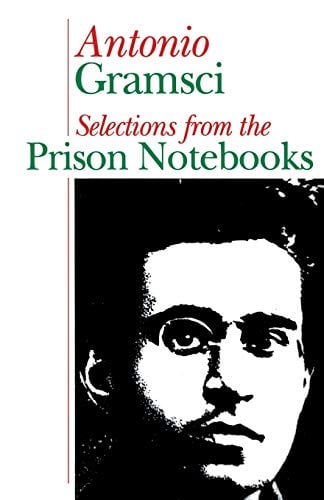
No. 34 on this list. Selections from the Prison Notebooks
Antonio Gramsci · 1948
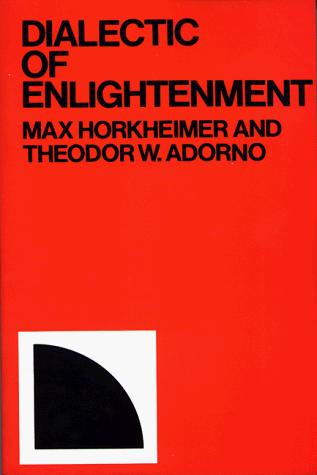
No. 35 on this list. Dialectic of Enlightenment
Theodor W. Adorno · 1944
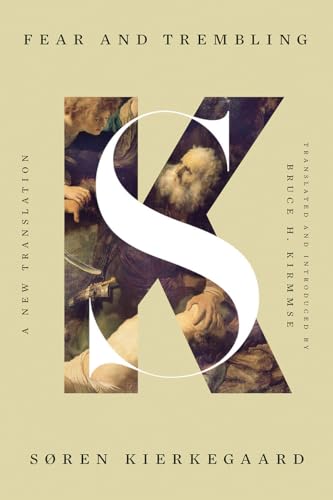
No. 36 on this list. Fear and Trembling
Søren Kierkegaard · 1843
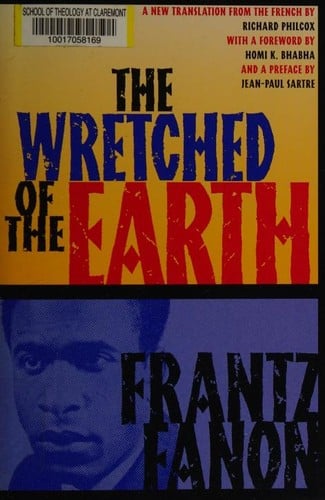
No. 37 on this list. The Wretched of the Earth
Frantz Fanon · 1961
No. 38 on this list. Night
Elie Wiesel · 1960
No. 39 on this list. The Bhagavad Gita
Vyasa · c. 200 BCE
No. 40 on this list. Aesthetic Theory
Theodor W. Adorno · 1970
No. 41 on this list. Essays
Michel de Montaigne · 1580
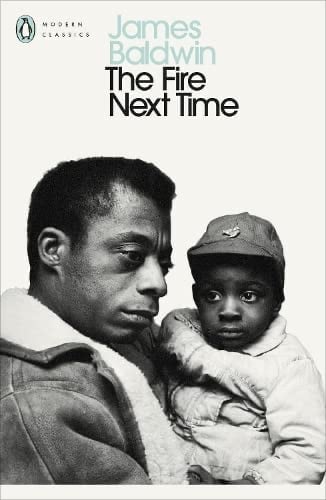
No. 42 on this list. The Fire Next Time
James Baldwin · 1963
No. 43 on this list. Walden
Henry David Thoreau · 1854
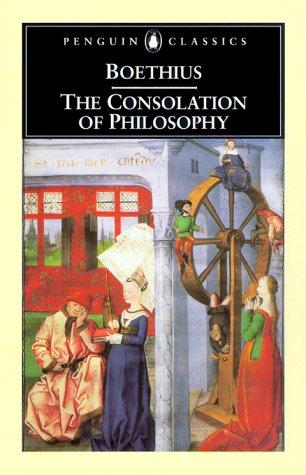
No. 44 on this list. The Consolation of Philosophy
Boethius · 524
No. 45 on this list. Seven Types of Ambiguity
William Empson · 1930
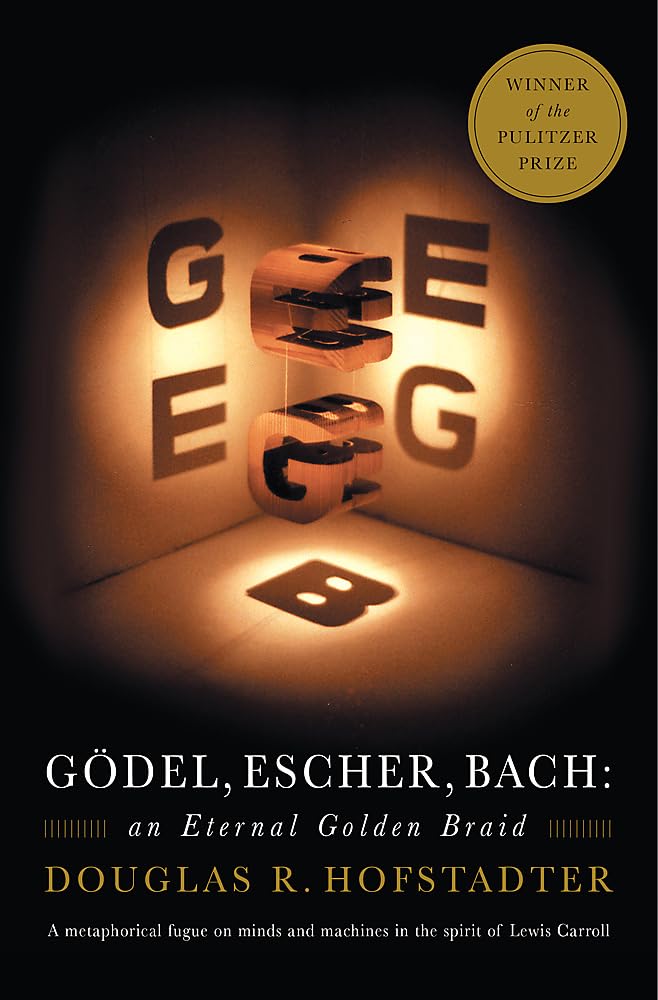
No. 46 on this list. Gödel, Escher, Bach: An Eternal Golden Braid
Douglas R. Hofstadter · 1979
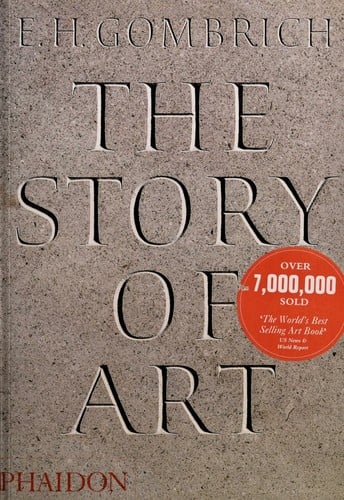
No. 47 on this list. The Story of Art
E.H. Gombrich · 1950
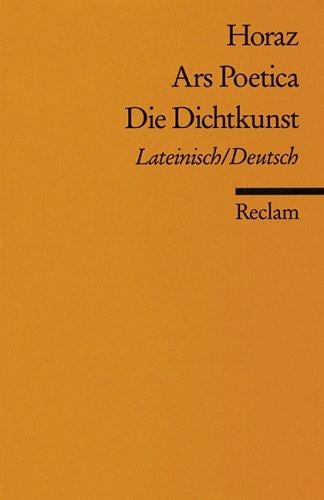
No. 48 on this list. Ars Poetica
Horace · c. 19 BCE
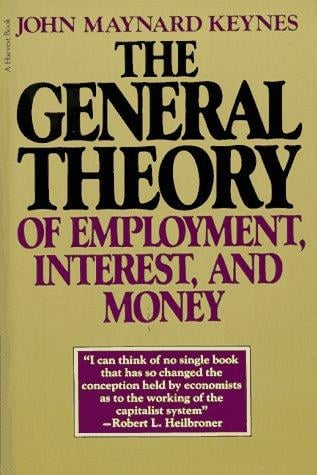
No. 49 on this list. The General Theory of Employment, Interest and Money
John Maynard Keynes · 1936
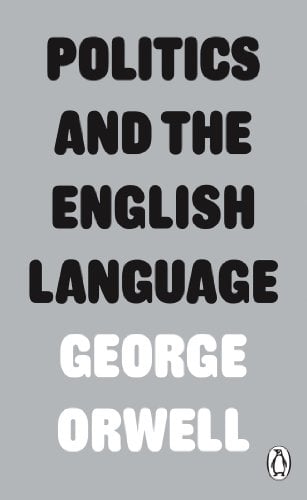
No. 50 on this list. Politics and the English Language
George Orwell · 1946

No. 51 on this list. The American Renaissance: Art and Expression in the Age of Emerson and Whitman
F.O. Matthiessen · 1941
No. 52 on this list. Notes of a Native Son
James Baldwin · 1955
No. 53 on this list. The Poetry of Du Fu
No. 54 on this list. The Logic of Scientific Discovery
Karl Popper · 1934
No. 55 on this list. Where I Lived, and What I Lived for
No. 56 on this list. The Histories
Herodotus · c. 430 BCE
No. 57 on this list. The Lives of the Artists
Giorgio Vasari · 1550
No. 58 on this list. The Presentation of Self in Everyday Life
Erving Goffman · 1956
No. 59 on this list. Confessions
Jean-Jacques Rousseau · 1782
No. 60 on this list. On Certainty
Ludwig Wittgenstein · 1969
No. 61 on this list. The Power Broker
Robert A. Caro · 1974
No. 62 on this list. Reveries of the Solitary Walker
Jean-Jacques Rousseau · 1782
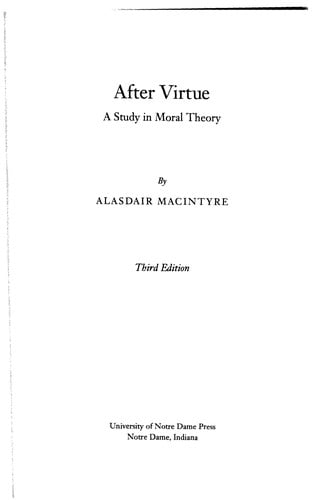
No. 63 on this list. After Virtue
Alasdair MacIntyre · 1981
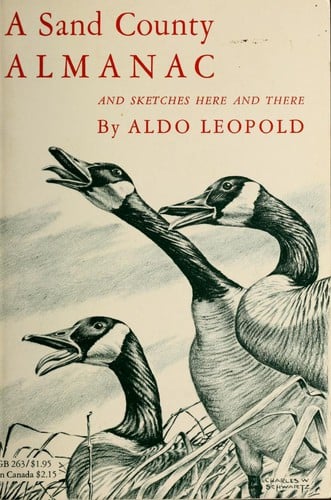
No. 64 on this list. Sand County Almanac
Aldo Leopold · 1949
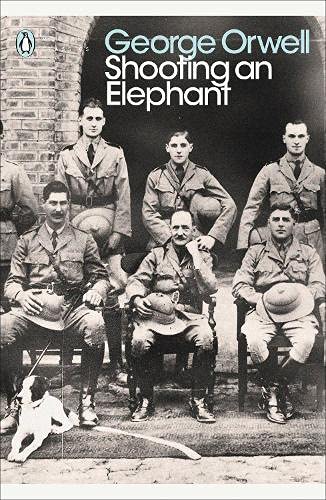
No. 65 on this list. Shooting an Elephant and Other Essays
George Orwell · 1950
No. 66 on this list. Ways of Seeing
John Berger · 1972
No. 67 on this list. Structure, Sign, and Play
Jacques Derrida · 1966
No. 68 on this list. De Vulgari Eloquentia
Dante Alighieri · 1304
No. 69 on this list. Blindness and Insight
Paul de Man · 1971
No. 70 on this list. The Location of Culture
Homi K. Bhabha · 1994
No. 71 on this list. Biographia Literaria
Samuel Taylor Coleridge · 1817
No. 72 on this list. In Cold Blood
Truman Capote · 1966
No. 73 on this list. Minima Moralia
Theodor W. Adorno · 1951
No. 74 on this list. The Essays
Francis Bacon · 1625
No. 75 on this list. Preface to Cromwell
Victor Hugo · 1827
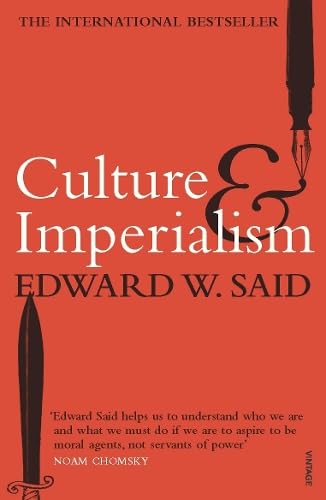
No. 76 on this list. Culture and Imperialism
Edward Said · 1993
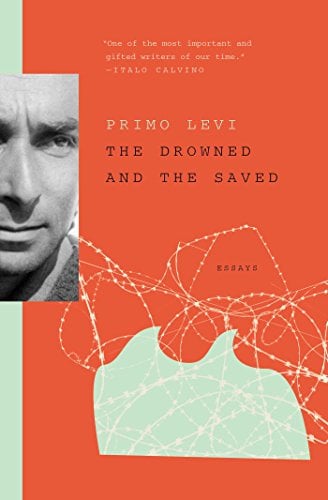
No. 77 on this list. The Drowned and the Saved
Primo Levi · 1986
No. 78 on this list. Areopagitica
John Milton · 1644
Included in: Great Books of the Western World
No. 79 on this list. The Autobiography of Benjamin Franklin
Benjamin Franklin · 1791
No. 80 on this list. Letter from Birmingham Jail
Martin Luther King Jr. · 1963
No. 81 on this list. Preface to Shakespeare
Samuel Johnson · 1765
No. 82 on this list. European Literature and the Latin Middle Ages
Ernst Robert Curtius · 1948
No. 83 on this list. A History of Modern Chinese Fiction
C. T. Hsia · 1961
No. 84 on this list. Culture and Anarchy
Matthew Arnold · 1869
No. 85 on this list. A Theory of Justice
John Rawls · 1971
No. 86 on this list. The Periodic Table
Primo Levi · 1975
No. 87 on this list. Dawn Blossoms Plucked at Dusk
Lu Xun · 1928
No. 88 on this list. Practical Criticism
I.A. Richards · 1929
No. 89 on this list. New Science
Giambattista Vico · 1725
No. 90 on this list. James Joyce
Richard Ellmann · 1959
No. 91 on this list. The Civil War: A Narrative, Volume 1
Shelby Foote · 1958
No. 92 on this list. Letters from a Stoic
Seneca · 65
No. 93 on this list. The Selfish Gene
Richard Dawkins · 1976
No. 94 on this list. Emile, or On Education
Jean-Jacques Rousseau · 1762
No. 95 on this list. Black Boy
Richard Wright · 1945
No. 96 on this list. The Hero with a Thousand Faces
Joseph Campbell · 1949
No. 97 on this list. Laocoon: An Essay on the Limits of Painting and Poetry
Gotthold Ephraim Lessing · 1766
No. 98 on this list. The Road to Serfdom
Friedrich Hayek · 1944
No. 99 on this list. Things Fall Apart: A Critical Companion
Ngugi wa Thiong'o · 1986
No. 100 on this list. Understanding Media
Marshall McLuhan · 1964

About this list
These 100 books are the highest-scoring eligible nonfiction books by men currently in the catalogue. By literary regard, it opens with Critique of Judgment, The Origin of Species and Philosophical Investigations. About 1,399 hours of reading in all, for the 99 with measured lengths. Difficulty runs from 46 to 69 out of 100 for the middle half of the list; the summit is Aesthetic Theory at 91.
This list is ranked by literary regard, with a consistent order for equal scores. Membership follows authors and co-authors, not translators or editors. Catalogue coverage and the historical canon both limit what this list can represent, and genre labels are the catalogue’s own, gathered into broader kinds.
When we matched the Canons dataset to our catalogue in October 2026, our canonical-status scores rose with the number of school curricula, publisher series and lists in it that cite a work: the median score was 72 for books one such source cites, 84 at two, 88 at three, 92 at four and 93 at five or more. Prizes are left out of that count. Outside the state curricula, the dataset’s sources choose mostly from what has been translated into English or French, so it is a weaker check on other literatures. Source: Canons (Andrew Piper), CC BY 4.0
Questions people actually ask
- What are the best nonfiction books by men?
- By literary regard, which weighs canonical status, critical standing and influence, Critique of Judgment, The Origin of Species, Philosophical Investigations, The Essential Darwin: On the Origins of Species/The Descent of Man and Summa Theologica lead. ReadingRate ranks 100 such books, each with a difficulty score and a reading-time estimate.
- Where should I start with nonfiction books by men?
- Start from difficulty, not from rank. The most approachable books on this list that still carry top literary regard are The Selfish Gene by Richard Dawkins (about 6.4 hours), Politics and the English Language by George Orwell and A Theory of Justice by John Rawls.
- How hard are nonfiction books by men to read?
- Most of this list sits between 46 and 69 on ReadingRate's 100-point difficulty scale, where 40 to 55 is moderate. The summit is Aesthetic Theory at 91. Every entry carries its own score, so a reader can pick a great book at a difficulty they will finish.
- How is this list ranked?
- On literary-regard data: how canonically established a work is, its critical standing, and its influence on later writing. It is not a readers’ poll, which is why recent bestsellers rarely appear. Membership follows authors and co-authors, not translators or editors. A list that is not a genre list keeps to literature (fiction, poetry, drama and philosophy), with philosophy taking no more than one slot in five while there is literature left to rank; every list holds at most three works by one author.