Hours at an average pace
Showing 100 books
About 920 hours for 100 of 100 books with measured lengths. Estimates use 250 words a minute, adjusted for each book's difficulty. At 2 hours a day, about 461 days for those books.
The Preface to Lyrical Ballads is the founding manifesto of English Romanticism and appears on every university syllabus in Romantic literature, literary theory, and criticism courses. It is required reading in virtually all English literature programs and is cited as the document that defined the terms of English poetry for the 19th century. Its presence in literary education is as reliable as any text in the tradition.
The Enquiry is a staple of introductory philosophy and early-modern courses worldwide, usually paired with Descartes and Kant. It sits among the core texts of the empiricist tradition.
Woolf asked why women had produced so little literature, then answered with ruthless material specificity: because they lacked money and rooms with locks on the doors. The extended essay fused literary criticism with feminist argument in a voice so controlled that its anger registers as wit, and its conclusions have only become more difficult to refute.
Seven Types of Ambiguity appears on virtually every literary criticism, New Criticism, and critical theory syllabus in Anglophone universities. It is among the half-dozen foundational texts of 20th-century literary criticism alongside Practical Criticism and The Well-Wrought Urn, taught consistently from undergraduate survey courses through graduate theory seminars. The database contains no syllabus count, but its unbroken pedagogical presence for nearly a century places it alongside Beloved (85) or above in canonical weight.
The Collected Essays and The Common Reader are staples of university courses in modernism, literary criticism, and women's writing globally. While no Wikipedia or syllabus data was returned for this specific collection, Woolf's essays are foundational to any survey of 20th-century literary criticism and have been continuously in print since the 1920s.
The essay appears on virtually every university syllabus for Old English literature, history of criticism, and medieval studies worldwide. No syllabus data appears in the database, but this reflects a cataloguing gap rather than the essay's true reach—it is the foundational critical statement about Beowulf and the starting point for all subsequent scholarship on the poem.
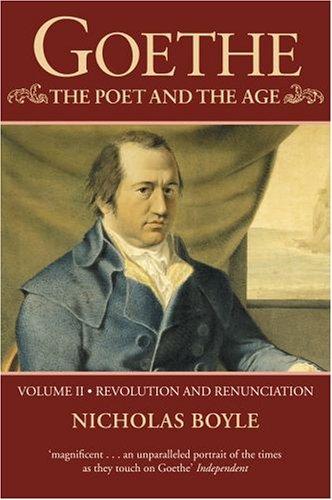
Recognized as the definitive English-language scholarly life of Goethe.
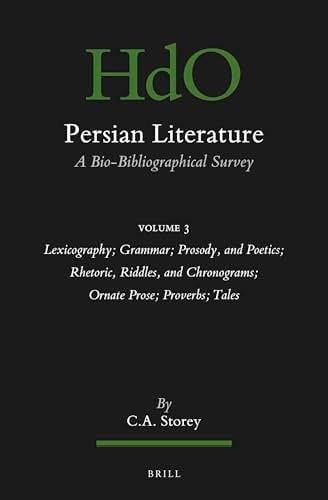
No. 8 on this list. Persian Literature: A Bio-Bibliographical Survey
Charles Ambrose Storey · 1927
Moderate13 hours
The indispensable reference work for Persian literary scholarship; no comparable alternative exists.
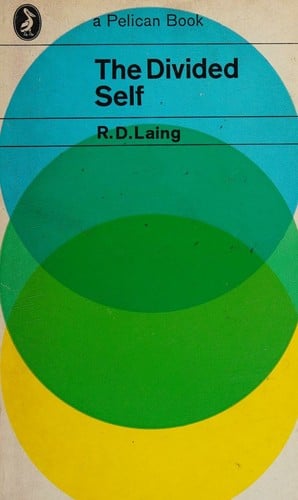
No. 9 on this list. The Divided Self: An Existential Study in Sanity and Madness
R. D. Laing · 1960
Challenging7.6 hours
Foundational text in existential psychiatry and antipsychiatry; one of the most widely read works in twentieth-century psychology.
One of the most anthologized and assigned essays in the English language, a fixture of first-year composition, rhetoric, and journalism curricula worldwide. Its six rules and the phrase 'political language' recur in countless style guides and writing handbooks. No syllabus or Wikipedia-language data was available in our database, but its teaching presence rivals the most-taught novels.

No. 11 on this list. What Is History? · E.H. Carr · 1961
The single most widely assigned text in introductory historiography courses worldwide.
Moderate4.4 hours
Start this bookNo. 12 on this list. Culture and Society: 1780–1950 · Raymond Williams · 1958
Raymond Williams traces the development of the idea of 'culture' in British thought from the industrial revolution through the 1950s, reading a succession of writers — Burke, Cobbett, Owen, Carlyle, Mill, Arnold, Ruskin, Morris, Lawrence, Orwell, Eliot, and others — as respondents to the same crisis: the impact of industrial capitalism on human community and feeling. Williams argues that the tradition of cultural criticism is not simply conservative nostalgia but a running protest against the reduction of human life to economic terms. His readings are generous and precise; his argument is that culture is not a possession of elites but a description of a whole way of life. The book created cultural studies as a discipline and remains its founding text. Essential for understanding what British literature has been doing since the Romantics.
Challenging7.9 hours
Start this bookNo. 13 on this list. The Great Tradition · F.R. Leavis · 1948
The defining document of mid-20th-century English literary criticism.
Challenging7.2 hours
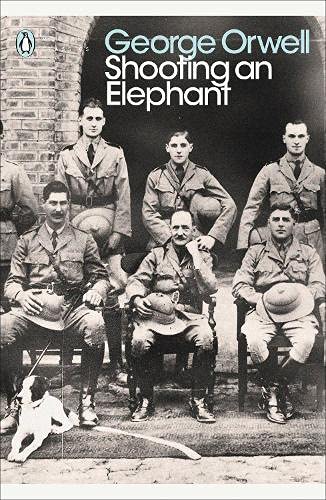
Start this bookNo. 14 on this list. Shooting an Elephant and Other Essays · George Orwell · 1950
Orwell's essays are standard fixtures in English literature and university composition courses worldwide. 'Shooting an Elephant' and 'Politics and the English Language' rank among the most-assigned essays in undergraduate curricula, appearing across literature, political science, and writing programs. Individual essays have been continuously reprinted since their first collection in the late 1940s.
Moderate7 hours
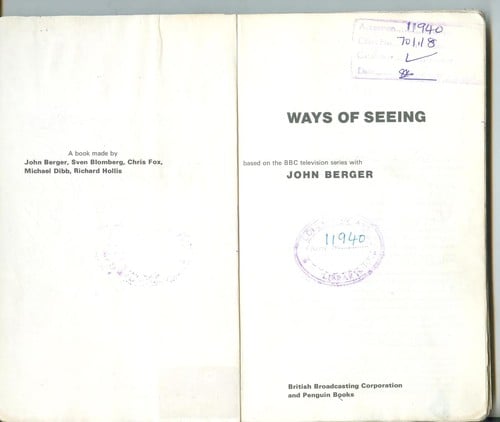
Start this bookNo. 15 on this list. Ways of Seeing · John Berger · 1972
Required reading in virtually every art history, visual culture, media studies, and design curriculum globally. The book single-handedly changed how art criticism is taught, appearing on syllabi across disciplines from fine art to gender studies to communications. Its place in the Western critical canon is essentially uncontested.
Moderate1.6 hours
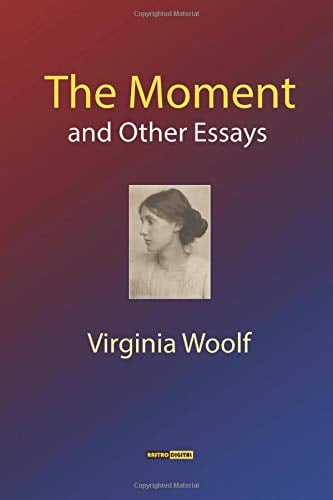
Start this bookNo. 16 on this list. The Death of the Moth and Other Essays · Virginia Woolf · 1942
The title essay 'The Death of the Moth' is one of the most anthologized pieces in the English language, appearing in virtually every major collection of literary essays and countless university writing courses. Though the collection as a whole is less individually indexed than Woolf's novels, these essays — alongside 'Street Haunting' and 'Middlebrow' — are fixtures of modernist prose and creative nonfiction curricula worldwide.
Moderate4.6 hours
Start this bookNo. 17 on this list. Biographia Literaria · Samuel Taylor Coleridge · 1817
Samuel Taylor Coleridge published Biographia Literaria in 1817 to settle a score with critics, explain his intellectual development, and deliver a theory of the Imagination that would ground all of English poetry on philosophical foundations. He does two of these things. The third — the promised deduction of the Primary and Secondary Imagination from Kantian and Schellingian idealism — arrives in Chapter 13 as a single dense paragraph, preceded by a letter from a friend advising Coleridge not to publish the full argument lest it overwhelm his readers. The letter is fictional. The argument was never written. What Coleridge gives instead is something stranger: a self-portrait that uses autobiography as scaffolding for philosophy, and philosophy as scaffolding for the most exacting account of Wordsworth's genius and failures produced by anyone in the 19th century. The chapters on Lyrical Ballads identify with precision which poems succeed, which fail, and why — the analysis of 'The Thorn' and 'Guilt and Sorrow' is still the most incisive criticism of early Wordsworth written. The philosophical chapters require patience with Kant, Schelling, and Hartley; the autobiographical chapters reward it with the closest thing we have to Coleridge's intellectual self-accounting. The book is the record of a mind moving at full stretch, making promises it cannot keep and keeping ones it never made.
Difficult14 hours
Start this bookNo. 18 on this list. The Lives of the Poets · Samuel Johnson · 1781
Standard on university English and literary criticism syllabi across British and American institutions. No automated syllabus data was returned, but the work's position as the founding document of English literary biography places it well above specialized cult texts. Virtually every survey of 18th-century English literature assigns selections from the Lives.
Moderate3.9 hours
Start this bookNo. 19 on this list. The Essays · Francis Bacon · 1625
Bacon's Essays appear on English literature survey syllabi and Renaissance studies courses across the anglophone world. They established the English familiar essay as a genre and appear on most 'English prose classics' and 'founding texts of the essay' reading lists alongside Montaigne's Essais. The database shows no records, but this reflects data coverage gaps rather than actual obscurity.
Moderate3.5 hours
Start this bookNo. 20 on this list. The Literature of Terror: A History of Gothic Fictions from 1765 to the Present Day · David Punter · 1980
The foundational text of Gothic studies as an academic field.
Difficult10 hours
Start this book
No. 21 on this list. Turkish Literature: A Bio-Bibliographical Survey · E.J.W. Gibb · 1900
Irreplaceable as the only comprehensive English-language history of Ottoman classical poetry; in continuous use for over a century.
Moderate20 hours
Start this bookNo. 22 on this list. Areopagitica · John Milton · 1644
Included in: Great Books of the Western World
The foundational text of free speech philosophy. Required reading in political philosophy, law, and media studies worldwide.
Moderate1.3 hours
Read nowNo. 23 on this list. Preface to Shakespeare · Samuel Johnson · 1765
The Preface to Shakespeare is one of the canonical texts of English literary criticism, taught in virtually every graduate programme in English literature and appearing on syllabi in the history of criticism and 18th-century studies. It is treated as a foundational document of English critical thought alongside Sidney's Defence of Poesy and Arnold's 'The Function of Criticism.' No syllabus data is available in the database, but its presence in standard anthologies of literary criticism is well established.
Moderate1.4 hours
Start this bookNo. 24 on this list. Tolstoy or Dostoevsky: An Essay in the Old Criticism · George Steiner · 1959
Standard reference in Slavic studies and comparative literature courses.
Challenging11 hours
Start this bookNo. 25 on this list. Scotland's Books · Robert Crawford · 2007
The standard single-volume history of Scottish literature; winner of the Saltire Scottish Research Book of the Year.
Moderate13 hours
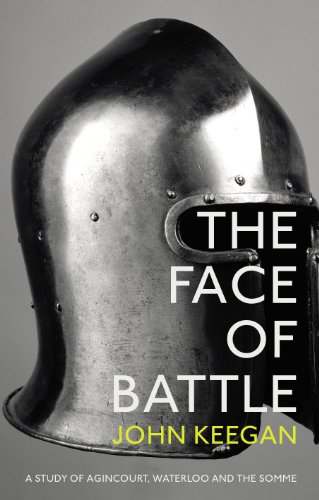
Start this bookNo. 26 on this list. The Face of Battle · John Keegan · 1976
John Keegan opens by confessing that he has never been in battle. He has walked battlefields, handled shell fragments, interviewed veterans — including his own father — but the experience itself remains beyond him. This admission becomes the book's organizing principle: what can a military historian who was not there actually know? The Face of Battle answers by turning the camera around. Instead of examining campaigns from the commanders' perspective — the maps, the orders, the strategic objectives — Keegan looks at battle from the inside: what a longbowman at Agincourt felt as a French cavalry charge broke against his stakes, what a British infantryman at Waterloo heard and smelled during the closing hours, what the soldiers of the Somme's first day encountered in the seconds after they climbed out of the trenches on 1 July 1916. Each of the three battle chapters works through tactical mechanics, casualty statistics, and soldiers' own accounts to reconstruct the physical and psychological reality of fighting. The first chapter is the most demanding — a methodological argument about the limits and possibilities of military history as a discipline. The three battle analyses are more immediate, drawing on memoirs and letters to let soldiers describe what happened to their bodies and minds under fire. The final pages ask a harder question: whether large-scale battle between industrial armies has become so destructive, so indifferent to human agency, that it can no longer function as a rational instrument. Keegan leaves the answer open. The book established a genre.
Moderate7.9 hours
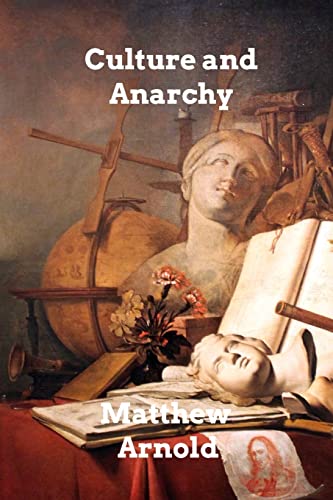
Start this bookNo. 27 on this list. Culture and Anarchy · Matthew Arnold · 1869
Culture and Anarchy appears on university syllabi across English literature, Victorian studies, cultural theory, and political philosophy — a fixture in courses treating 19th-century intellectual history. The book introduced class-descriptive vocabulary ('Philistines,' 'Barbarians,' 'Populace') that entered common English usage, and Arnold's definition of culture as 'the best which has been thought and said' became the default point of departure for all subsequent debates about cultural value. Less universally taught than the novel canon but indispensable in the Victorian prose tradition.
Challenging5 hours
Start this bookNo. 28 on this list. Ancient Literary Criticism: The Principal Texts in New Translations · D.A. Russell · 1972
The standard English anthology of ancient literary criticism; widely used in universities.
Challenging11 hours
Start this bookNo. 29 on this list. Practical Criticism · I.A. Richards · 1929
Foundational text of close reading as a method. Required in most courses on critical methodology.
Challenging6 hours
Start this bookNo. 30 on this list. The Rise of the Novel: Studies in Defoe, Richardson and Fielding · Ian Watt · 1957
The classic account of the eighteenth-century English novel, assigned for decades in courses on Defoe, Richardson and Fielding and on the theory of the novel. Even its critics treat it as the starting point for the subject.
Challenging7.7 hours
Start this book
No. 31 on this list. The Empty Space
Peter Brook · 1968
No. 32 on this list. The Defence of Poesy
Philip Sidney · 1595
No. 33 on this list. A Defence of Poetry
Percy Bysshe Shelley · 1840
No. 34 on this list. Ibsen: A Biography
Michael Meyer · 1971
No. 35 on this list. The Road to Wigan Pier
George Orwell · 1937
No. 36 on this list. The Cambridge History of Italian Literature
Peter Brand · 1996
No. 37 on this list. The Golden Bough
James George Frazer · 1890
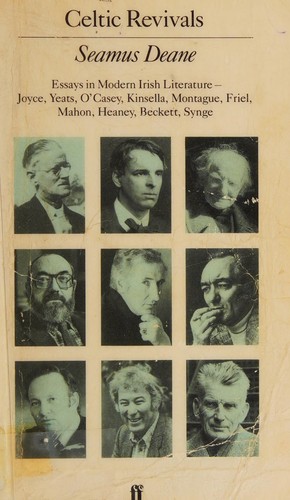
No. 38 on this list. Celtic Revivals
Seamus Deane · 1985
No. 39 on this list. Proust Among the Stars
Malcolm Bowie · 2001
No. 40 on this list. Marxism and Literature
Raymond Williams · 1977
No. 41 on this list. The Anatomy of Melancholy
Robert Burton · 1621
No. 42 on this list. The English Novel from Dickens to Lawrence
Raymond Williams · 1970
No. 43 on this list. Dante: The Poet, the Political Thinker, the Man
Barbara Reynolds · 2006
No. 44 on this list. Early Greek Philosophy
Jonathan Barnes · 1979
No. 45 on this list. The Theatre of the Absurd
Martin Esslin · 1961
No. 46 on this list. Studies in Classic American Literature
D.H. Lawrence · 1923
No. 47 on this list. The Deceptive Realism of Machado de Assis
John Gledson · 1984
No. 48 on this list. An Introduction to Spanish-American Literature
Jean Franco · 1969
No. 49 on this list. Heathcliff and the Great Hunger
Terry Eagleton · 1995
No. 50 on this list. The Cambridge History of German Literature
Helen Watanabe-O'Kelly · 1997
No. 51 on this list. The Cambridge Companion to Crime Fiction
Martin Priestman · 2003
No. 52 on this list. Out of History
Cairns Craig · 1996
No. 53 on this list. The Cambridge Companion to English Renaissance Drama
Michael Hattaway · 2003
No. 54 on this list. Scottish and Irish Romanticism
Murray Pittock · 2008
No. 55 on this list. English Literature in the Sixteenth Century, Excluding Drama
C.S. Lewis · 1954
No. 56 on this list. The Greeks and the Irrational
E.R. Dodds · 1951
No. 57 on this list. The Literature of the Sagas
W. P. Ker · 1930
No. 58 on this list. The Practice of History
G.R. Elton · 1967
No. 59 on this list. Modern Arabic Literature
Roger Allen · 1987
No. 60 on this list. Scottish Literature in English and Scots
Douglas Gifford · 2002
No. 61 on this list. The History of Science Fiction
Adam Roberts · 2006
No. 62 on this list. The Death of Tragedy
George Steiner · 1961
No. 63 on this list. On Fairy-Stories
J.R.R. Tolkien · 1947
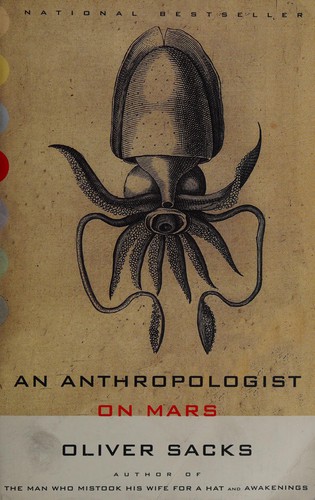
No. 64 on this list. An Anthropologist on Mars
Oliver Sacks · 1995
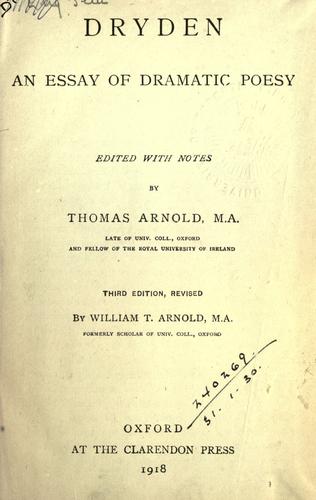
No. 65 on this list. An Essay of Dramatic Poesy
John Dryden · 1668
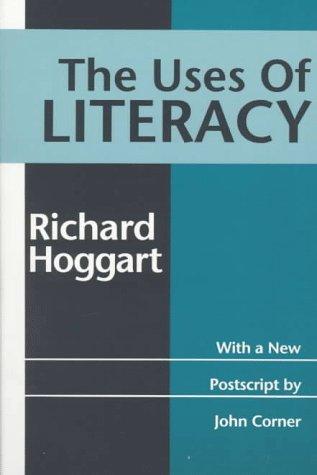
No. 66 on this list. The Uses of Literacy
Richard Hoggart · 1957
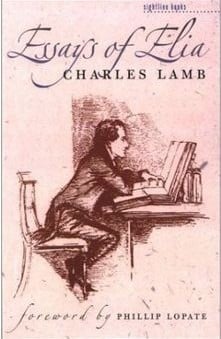
No. 67 on this list. Essays of Elia
Charles Lamb · 1823
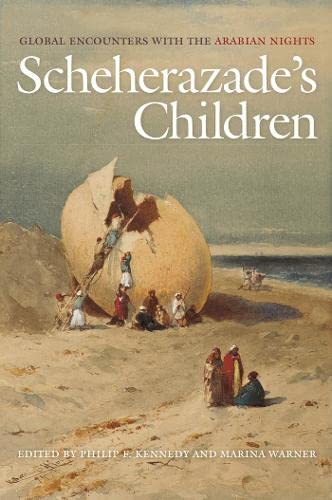
No. 68 on this list. Scheherazade's Children: Global Encounters with the Arabian Nights
Philip Kennedy · 2013
No. 69 on this list. Black Lamb and Grey Falcon
Rebecca West · 1941
No. 70 on this list. The Cambridge Companion to the Modernist Novel
Morag Shiach · 2007
No. 71 on this list. On Liberty
John Stuart Mill · 1859
No. 72 on this list. Eminent Victorians
Lytton Strachey · 1918
No. 73 on this list. Enlightenment and Despair: A History of Social Theory
Geoffrey Hawthorn · 1978
No. 74 on this list. Principles of Literary Criticism
I.A. Richards · 1924
No. 75 on this list. Literary Theory: An Introduction
Terry Eagleton · 1983
No. 76 on this list. Coming of Age in Literature: Adolescence as a Theme in Fiction
Kenneth Millard · 2000
No. 77 on this list. The Metamorphosis of the German Novel: Kafka in Context
Michael Minden · 1997
No. 78 on this list. Twentieth-Century Crime Fiction: Gender, Sexuality and the Body
Lee Horsley · 2005
No. 79 on this list. The French Novel from Stendhal to Proust
Martin Turnell · 1950
No. 80 on this list. A History of God
Karen Armstrong · 1993
No. 81 on this list. Underland: A Deep Time Journey
Robert Macfarlane · 2019
No. 82 on this list. How Fiction Works
James Wood · 2008
No. 83 on this list. After the Death of Literature: Essays on the Contemporary Novel
Peter Boxall · 2020
No. 84 on this list. How Proust Can Change Your Life
Alain de Botton · 1997
No. 85 on this list. The Peregrine
J. A. Baker · 1967
No. 86 on this list. The Shame of Poverty
Robert Walker · 2014
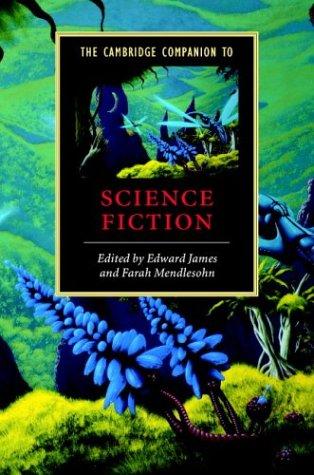
No. 87 on this list. The Cambridge Companion to Science Fiction
Edward James · 2003
No. 88 on this list. The Wasteland and Other Poems: A Casebook
C. B. Cox · 1968
No. 89 on this list. Virginia Woolf: A Critical Introduction
Deborah Parsons · 2007
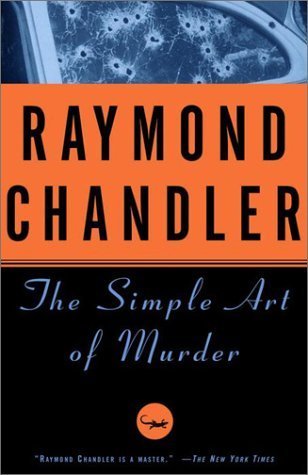
No. 90 on this list. The Simple Art of Murder
Raymond Chandler · 1950
No. 91 on this list. Charles Dickens: A Critical Introduction
K. J. Fielding · 1971
No. 92 on this list. The Working-Class Novel in the Age of Mass Media
Ian Haywood · 1997
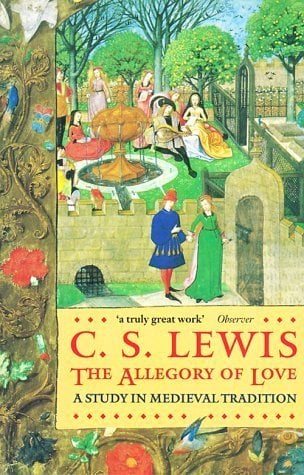
No. 93 on this list. The Allegory of Love
C.S. Lewis · 1936
No. 94 on this list. The English Novel: A Short Critical History
Walter Allen · 1954
No. 95 on this list. The Living Mountain
Nan Shepherd · 1977
No. 96 on this list. About Looking
John Berger · 1980
No. 97 on this list. Short Stories and Short Fictions, 1880–1980
Clare Hanson · 1985
No. 98 on this list. Distant Voices, Still Lives: The Novel of Adolescence in Britain and America
Glyn Salton-Cox · 1994
No. 99 on this list. Aspects of the Novel
E.M. Forster · 1927
No. 100 on this list. James Joyce's Ulysses
Stuart Gilbert · 1930

About this list
These 100 books are the highest-scoring eligible essay collections from Britain currently in the catalogue. By literary regard, it opens with Preface to Lyrical Ballads, Philosophical essays concerning human understanding and A Room of One's Own. About 920 hours of reading in all. Difficulty runs from 49 to 63 out of 100 for the middle half of the list; the summit is Out of History at 81.
This list is ranked by literary regard, with a consistent order for equal scores. Membership follows authors and co-authors, not translators or editors. Catalogue coverage and the historical canon both limit what this list can represent, and genre labels are the catalogue’s own, gathered into broader kinds.
When we matched the Canons dataset to our catalogue in October 2026, our canonical-status scores rose with the number of school curricula, publisher series and lists in it that cite a work: the median score was 72 for books one such source cites, 84 at two, 88 at three, 92 at four and 93 at five or more. Prizes are left out of that count. Outside the state curricula, the dataset’s sources choose mostly from what has been translated into English or French, so it is a weaker check on other literatures. Source: Canons (Andrew Piper), CC BY 4.0
Questions people actually ask
- What are the best essay collections from Britain?
- By literary regard, which weighs canonical status, critical standing and influence, Preface to Lyrical Ballads, Philosophical essays concerning human understanding, A Room of One's Own, Seven Types of Ambiguity and The Collected Essays of Virginia Woolf lead. ReadingRate ranks 100 such books, each with a difficulty score and a reading-time estimate.
- Where should I start with essay collections from Britain?
- Start from difficulty, not from rank. The most approachable books on this list that still carry top literary regard are Politics and the English Language by George Orwell (about 16 min), Shooting an Elephant and Other Essays by George Orwell and The Road to Wigan Pier by George Orwell.
- How hard are essay collections from Britain to read?
- Most of this list sits between 49 and 63 on ReadingRate's 100-point difficulty scale, where 40 to 55 is moderate. The summit is Out of History at 81. Every entry carries its own score, so a reader can pick a great book at a difficulty they will finish.
- How is this list ranked?
- On literary-regard data: how canonically established a work is, its critical standing, and its influence on later writing. It is not a readers’ poll, which is why recent bestsellers rarely appear. Membership follows authors and co-authors, not translators or editors. A list that is not a genre list keeps to literature (fiction, poetry, drama and philosophy), with philosophy taking no more than one slot in five while there is literature left to rank; every list holds at most three works by one author.